Baghdad Moves to Close Fuel Subsidy Arbitrage: How the New Cabinet Resolution Targets Private Refineries and the Kurdistan Region’s Energy Market
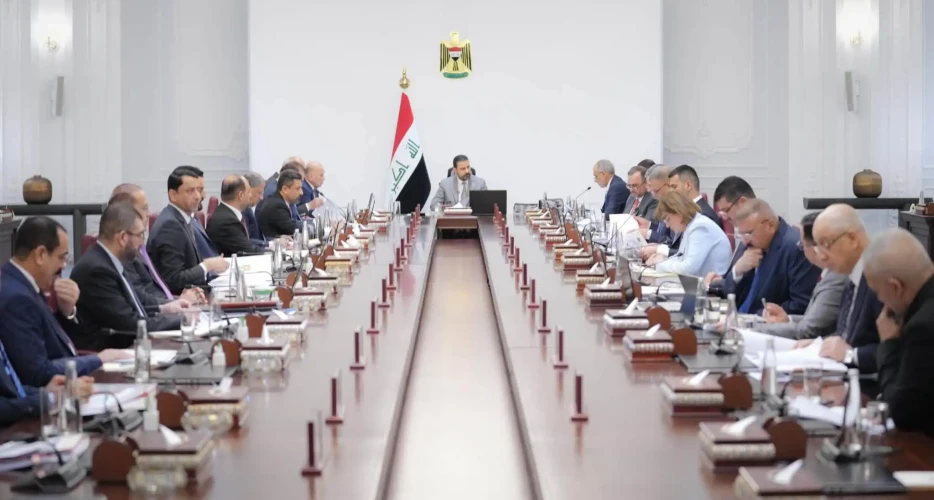
Peregraf - In a major effort to overhaul state expenditure and plug long-standing regulatory loopholes in the domestic oil sector, the Iraqi Council of Ministers passed a sweeping set of economic resolutions during its 15th regular session. Chaired by Prime Minister Ali Faleh Al-Zaidi, the decision establishes a standardized accounting framework for crude oil purchases, strips non-citizen commercial subsidies, and enforces strict financial oversight via the Federal Board of Supreme Audit.
The resolution addresses a persistent structural issue across the Kurdistan Region—where private refineries purchase state-assisted crude or feedstock at heavy government discounts, only for the finished gasoline to be sold on the open commercial market at global rates.
The Arbitrage Gap: Cheap Feedstock vs. Deregulated Retail Prices
In federal Iraq, the Ministry of Oil heavily subsidizes refined petroleum products, keeping standard gasoline universally accessible and capped at 450 IQD per liter at public stations. In the Kurdistan Region, however, KRG-backed fuel priced at 750 IQD per liter is produced in very limited quantities. Restricted strictly to a handful of local refineries receiving subsidized crude allocations, this KRG-backed fuel remains so scarce that obtaining it is practically impossible for the vast majority of ordinary citizens.
As a result, motorists across Sulaymaniyah, Erbil, and Duhok are forced to depend almost entirely on commercial stations. Recent attempts by the Kurdistan Regional Government’s Ministry of Natural Resources to enforce rigid price ceilings—capping Normal at 850 IQD, Improved at 1,000 IQD, and Super at 1,200 IQD—collapsed when private refiners and importers refused to sell at those rates, citing high input costs. When price controls failed and caused widespread station shutdowns, market deregulation returned. Commercial fuel prices spiked to record highs, ranging from 1,200 IQD to over 2,500 IQD per liter.
In industrial hubs such as Sulaymaniyah, major private refining operations—including the Fox Refinery in Arbat—have faced scrutiny over this margin spread. Private refiners and traders have historically accessed state crude or semi-refined feedstocks at steep discounts of 30% to 40% below SOMO (State Organization for Marketing of Oil) benchmarks. Despite receiving cheap input crude intended to stabilize the domestic energy sector, private entities sell the end-product gasoline at full, unmonitored commercial rates, absorbing the government discount directly into corporate profit margins while public supply remains scarce.
Core Directives of the August Cabinet Resolution
The official statement from the Prime Minister’s Media Office details structural modifications designed to decouple state subsidies from private commercial profits, taking effect on September 1, 2026:
- Standardized Crude Discount (Capped at 30%):
Crude oil allocations for authorized processing will be benchmarked against the official SOMO export price or the rate fixed in the federal budget (whichever is lower), with a maximum annual discount of 30%. This eliminates arbitrary or unmonitored local discounting arrangements.
- Complete Removal of Non-Citizen Subsidies:
The resolution mandates the elimination of fuel price subsidies across all commercial, industrial, and private sectors. State price protections will be strictly limited to four primary citizen-facing products: Gasoline, Diesel (Gas Oil), Kerosene, and Liquefied Petroleum Gas (LPG).
- Mandatory Supreme Audit Oversight:
All proposed subsidy programs and discounted crude allocations must pass through the Federal Board of Supreme Audit to establish an updated, binding accounting policy. This prevents refiners from mixing cheap state crude into private commercial distribution without incurring audit violations or financial penalties.
- 3-Month Export/Import Frameworks:
To maintain energy security, the Council authorized 3-month contracts with specialized international and local companies for crude exports and granted the Minister of Oil emergency powers to approve fuel imports when necessary to prevent local shortages.
Direct Impact and Implementation Challenges in the Kurdistan Region
The Cabinet decision forces private refiners operating across Sulaymaniyah, Erbil, and Duhok into a clear operational choice:
- The State-Contracted Model: Refiners that accept discounted state crude must operate as state processing partners, handing 100% of the refined fuel over to public distribution networks to be sold to citizens at capped prices.
- The Commercial Market Model: Refiners seeking to sell gasoline at unregulated open-market prices (1,200 to 2,500+ IQD) will no longer receive state crude discounts or raw material subsidies, requiring them to buy all inputs at full market value.
The Enforcement Question:
Whether this resolution can be fully implemented on the ground in the Kurdistan Region remains uncertain. Historically, enforcement of federal oil and financial regulations in the region has faced political hurdles and legal friction, with local authorities often bypassing or resisting federal directives. However, Baghdad's control over foreign currency transfers via the Central Bank, international trade clearances, and federal budget disbursements gives it significant financial leverage over non-compliant commercial entities.
By enforcing Federal Supreme Audit oversight and restricting price protections strictly to citizen-facing distribution, Baghdad’s new directive aims to strip commercial refiners of the ability to leverage state resources for private margin—setting a new precedent for how fuel is priced and distributed across the Kurdistan Region.