Peregraf
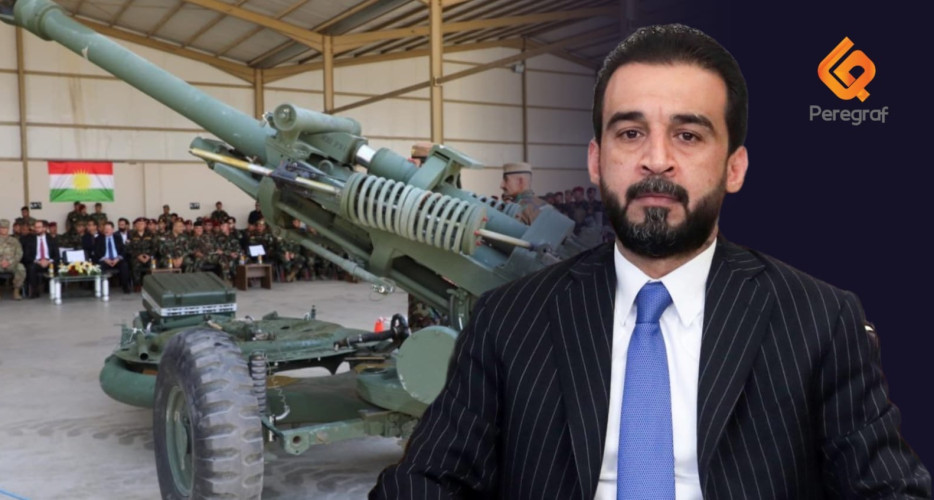
Expelled Iraqi Parliament Speaker Mohammed al-Halbousi, a key Sunni Arab leader, has voiced strong disapproval of the United States supplying heavy artillery to the Peshmerga forces. Halbusi's objections come over 40 days after the U.S. transferred the weaponry to the Peshmerga, with approval from Iraqi Prime Minister Mohammed Shia Sudani.
"We reject in any way the arming of local forces (with advanced heavy artillery) whose constitutional duty is only to protect internal security," Halbusi stated in a post on the social media platform X. He warned, "This rejected measure may undermine the national security of society in general and the provinces of Nineveh and Kirkuk in particular. These weapons may be misused in the future in ethnic conflict or be used for party purposes.”
Halbusi emphasized that "these weapons should only be in the hands of the Iraqi army, which we are constantly calling for to improve their capabilities."
On August 6, 2024, the United States officially handed over the heavy weaponry to the Ministry of Peshmerga. The U.S. Consulate remarked, "We have donated important military equipment to the Peshmerga Ministry, marking an important stage in capacity building. These weapons will improve the overall ability of the Peshmerga forces to provide security and ensure the continued and long-term defeat of ISIS led by Iraq."
Peshmerga Minister Shorsh Ismail acknowledged the transfer, stating, "A number of heavy weapons, including heavy artillery, will be handed over to the Kurdistan Peshmerga Forces, which will certainly elevate the military capabilities of the Peshmerga Ministry in this era of military technological warfare." He also expressed hope for further advanced technological weapons with ongoing support from allies, particularly the United States.
Ismail expressed gratitude to the Kurdistan Regional Government, the Peshmerga Ministry, and all Kurdistan commanders for their efforts in facilitating the delivery of the weapons, reaffirming that the Peshmerga forces are a part of the Iraqi territorial defense system.
However, despite ongoing U.S. and coalition assistance to the Peshmerga Ministry, concerns remain about the slow progress of reforms and unification of Peshmerga forces amid persistent party conflicts between the Patriotic Union of Kurdistan (PUK) and the Kurdistan Democratic Party (KDP) within the ministry. For the past seven years, the international coalition, particularly the U.S., the U.K., Germany, and the Netherlands, has aimed to create a national army for the Kurdistan Region by overcoming divisions within the PUK and KDP forces.