Peregraf
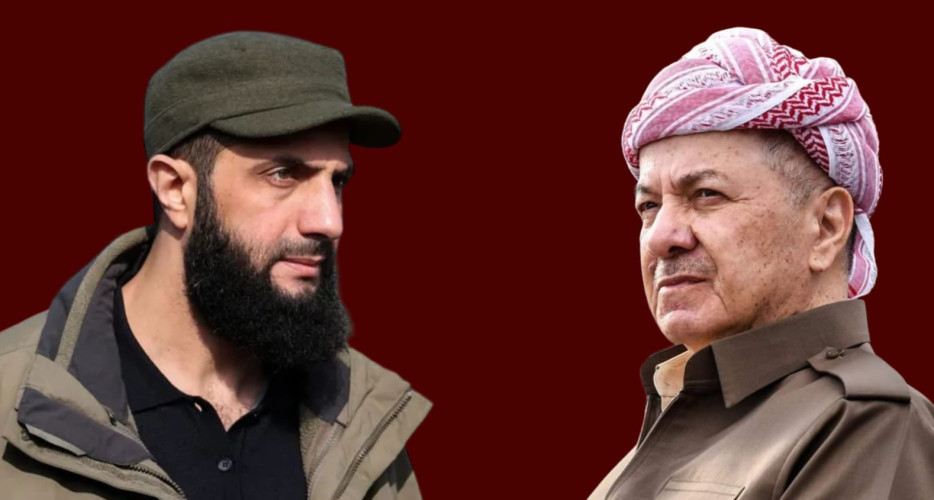
Kurdistan Democratic Party (KDP) President Massoud Barzani has issued a statement in response to recent remarks by Ahmed al-Shar’a, also known as Abu Mohammad al-Julani, the leader of Hayat Tahrir al-Sham (HTS), regarding the Kurdish people in Syria. Barzani described al-Shar’a’s comments as a positive step toward addressing historical injustices against the Kurdish population in Syria and fostering unity in the country.
“This view of the Kurds and the future of Syria is welcome, and we hope it will be the beginning to correct the course of history and to rectify the wrong treatment of the Kurdish people in Syria,” Barzani stated. He further emphasized that such perspectives could help build a stronger Syria where Kurds, Arabs, and other communities collaborate to establish a stable, free, and democratic state.
In a footage released on Saturday, December 14, 2024, al-Shar’a responded to a journalist’s question regarding his message to the Kurds and Syria’s national partners. “The Kurds are part of the country. They have been oppressed like us. Thank God, that oppression has disappeared with the overthrow of the regime. God willing, the Kurds will be the main partners in the future Syria,” he said.
Al-Shar’a added, “From today onwards, a new gateway and history will begin in Syria. In the new Syria, everyone will live together and receive their rights according to the law.”
This marks al-Shar’a’s first direct message to the Kurdish people since the fall of the Syrian regime. While his statement appears to signal a shift in rhetoric, the position of al-Shar’a and other opposition groups regarding the Kurdish-led Syrian Democratic Forces (SDF) remains unclear.
Barzani’s welcoming of al-Shar’a’s remarks underscores the importance of fostering inclusive dialogue and collaboration among Syria’s diverse communities. The Kurdish people in Syria have long faced discrimination, and their future role in the country remains a pivotal issue in shaping a post-conflict Syria.