Peregraf
The Patriotic Union of Kurdistan (PUK) President, Bafel Talabani, has reiterated the need for a service-oriented and just national Kurdistan regional government that serves all citizens without discrimination, ensuring the development of the Kurdistan Region and a stable future.
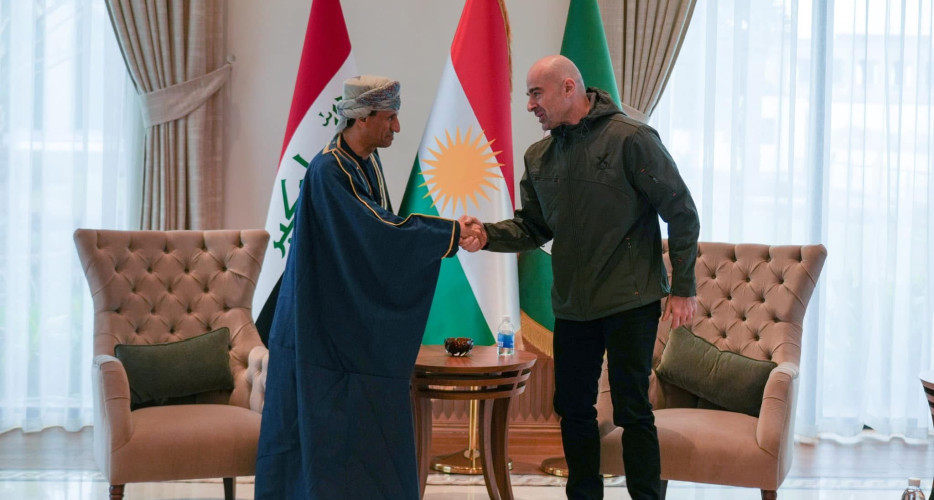
Talabani made these remarks during a meeting with the United Nations Secretary-General’s Representative in Baghdad, Mohammed al-Hassan. He urged the UN to mediate and assist political parties in finding a lasting resolution to the salary disputes between the Kurdistan Regional Government (KRG) and Baghdad, emphasizing the importance of protecting the rights of Kurdistan’s citizens and preventing their exploitation for political purposes.
On December 17, senior delegations from the PUK and the Kurdistan Democratic Party (KDP) met in Erbil to discuss forming a new government for the Kurdistan Region. The meeting concluded with an agreement to establish a joint committee tasked with drafting a comprehensive program for governance in the coming years.
A joint statement issued after the meeting highlighted the parties’ commitment to unity and solidarity in safeguarding the Kurdistan Region’s interests during a politically sensitive period.
“Both sides agreed on unity and solidarity in protecting the highest interests of the Kurdistan Region at this sensitive stage,” the statement read.
The meeting follows two weeks of political stalemate after the first session of the Kurdistan Parliament failed to elect parliamentary leadership due to disagreements between the KDP and PUK. This deadlock has left the session open-ended, further complicating efforts to form a government.
In the October 20 elections, the KDP emerged as the largest party with 39 seats, followed by the PUK with 23 seats. Smaller parties and minority representatives control 38 seats collectively. With 51 seats required for a majority, forming a coalition government is essential.
The KDP and PUK dominate Kurdistan’s political landscape, with territorial and political divisions: the KDP leads in Erbil and Duhok, while the PUK holds sway in Sulaymaniyah and Halabja. These dynamics underscore the necessity of collaboration between the two parties for a stable and functioning government.
Historically, coalitions between the KDP and PUK have been instrumental in ensuring regional stability. The recent talks signal a cautious optimism that the two parties can overcome their differences and work toward addressing critical regional challenges, including governance, economic development, and resolving disputes with Baghdad.
The outcome of these negotiations will be pivotal for the Kurdistan Region’s future, as citizens await a resolution to longstanding issues and the establishment of a government that prioritizes their needs.