Peregraf
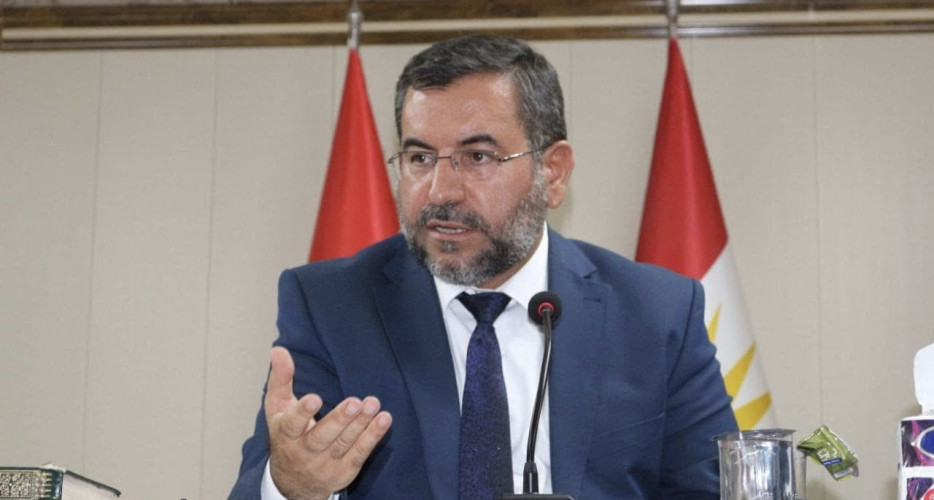
“The Kurdistan Regional Government (KRG) has the money and must pay the salaries,” said Muthanna Amin, a Kurdish member of the Iraqi Parliament, sharply criticizing the government’s handling of the salary crisis. “Where are the revenues of hundreds of thousands of oil tankers, border revenues, electricity, and traffic?”
Amin also called on Baghdad to act responsibly, stating, “The Iraqi federal government must pay the salaries of the employees and collect any federal revenue in the Kurdistan Region. The Kurdish people should not be punished for the KRG’s behavior.” However, he emphasized that “the first responsibility for salaries lies with the Kurdistan Regional Government.”
“Providing salaries is the simplest meaning of governance,” Amin said, adding that failure to do so renders the government meaningless. “If the federal government is guilty once, the Kurdistan Regional Government is guilty 10 times,” he stated, underlining the KRG’s greater share of responsibility in resolving the crisis.
Salary Crisis Remains Unresolved
On December 26, 2024, Peregraf reported that the salary crisis in the Kurdistan Region persists, with no resolution in sight. The Iraqi Ministry of Finance has not sent additional funds beyond the 631.3 billion dinars transferred on December 17, which was meant to cover November salaries. This amount falls significantly short of the 990 billion dinars required to fully pay public sector wages each month.
A source within the KRG’s Ministry of Finance told Peregraf that efforts are underway to secure an additional 430 billion dinars to partially address the deficit and fund December salaries. However, the source acknowledged, “So far, no results have been achieved.”
The Iraqi Ministry of Finance attributed the delays to discrepancies in audit balances provided by the KRG’s Ministry of Finance. These inconsistencies, according to the federal ministry, have caused the Kurdistan Region to deviate from approved salary funding mechanisms.
As the fiscal year nears its end, the KRG Ministry of Finance has placed two months’ salaries in trust, fueling fears among public employees. Many are concerned that, as in previous years, financial bottlenecks could lead to the loss of at least one month’s salary.
The prolonged delays have had a profound impact on the 1.25 million public sector employees and pensioners in the Kurdistan Region, leading to widespread financial strain and public unrest. Protests in the past have erupted in Sulaymaniyah, Halabja, Garmian, and Raparin, where teachers and other workers have organized boycotts in response to the ongoing crisis.
The salary crisis stems from long-standing disputes between Baghdad and Erbil over budget allocations, compounded by inefficiencies in the KRG’s payroll system. Despite a ruling by Iraq’s Federal Supreme Court mandating Baghdad to release funds for KRG salaries under certain conditions, delays persist, leaving public sector employees uncertain about their financial future.
The ongoing crisis highlights the urgent need for a comprehensive and sustainable solution. Without one, the strain on the Kurdistan Region’s workforce and economy is expected to worsen as 2025 approaches.