Peregraf
Confusion and frustration have escalated regarding “the failure to disburse salaries to public employees in Iraq and Kurdistan”, as the Deputy Speaker of the Iraqi Parliament and the Ministry of Finance provide conflicting accounts concerning the cash flow situation.
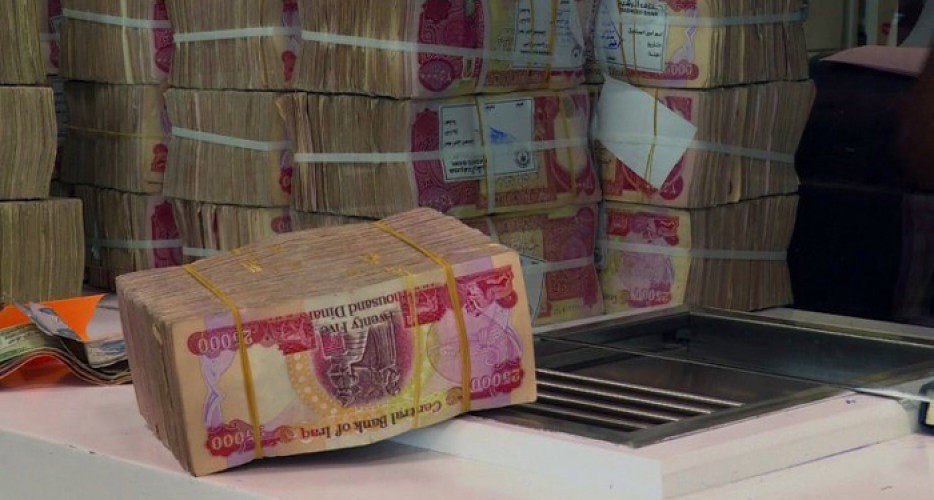
During a press conference, Shakhawan Abdullah, the Deputy Speaker of the Iraqi Parliament explained that the delays in salary payments for Members of Parliament, parliamentary staff, and various state institutions were due to "cash problems." The Deputy Speaker further announced that the Iraqi Government made a decision last week to disburse the November salaries to public employees in the Kurdistan region on December 30, followed by the distribution of December salaries for the same region.
The Iraqi Finance Ministry yesterday denied there were any problems in the distribution of salaries due to cash shortages, saying reports were "completely untrue." The ministry stresses that they are committed to providing salaries.
Although the Iraqi Ministry of Finance did not mention the salaries of the Kurdistan Regional Government (KRG), media close to the KDP have been claiming that the failure to send the salaries is related to cash shortages.
With only one day left until the end of the year, the salary crisis in the Kurdistan Region remains unresolved. The Iraqi Ministry of Finance has not sent any funds beyond the 631 billion 335 million dinars transferred on December 17 to cover November salaries, falling far short of the over 990 billion dinars required monthly to pay public sector wages in full.
A source familiar with the Kurdistan Regional Government’s (KRG) Ministry of Finance told Peregraf that efforts are ongoing to secure an additional 430 billion dinars to partially cover the deficit and ensure funding for December salaries. However, “so far, no results have been achieved,” the source said.
The Iraqi Ministry of Finance has blamed delays on discrepancies in audit balances from the KRG’s Ministry of Finance. According to the federal ministry, these inconsistencies caused the Kurdistan Region to deviate from the mechanisms approved for salary funding.
As the fiscal year approaches its end, the KRG Ministry of Finance has placed the two months’ salaries in trust, sparking fears among public employees. Many worry that, as seen in previous years, end-of-year financial bottlenecks could result in the loss of at least one month’s salary.
The lack of resolution has left the KRG in a precarious position, with public servants facing uncertainty and financial strain as 2025 looms. The persistent delays in salary distribution have severely impacted over 1.25 million public sector employees and pensioners across the Kurdistan Region, leading to significant financial strain and public unrest.
Widespread protests in the past weeks have erupted in Sulaymaniyah, Halabja, Garmian, and Raparin, where many teachers and workers have organized boycotts in response to the prolonged delays.
The salary crisis originates from longstanding disputes between Baghdad and Erbil over budget allocations, coupled with inefficiencies in the KRG's payroll system and internal revenues. Despite Iraq's Federal Supreme Court ruling that Baghdad must release funds for KRG salaries under specific conditions, delays continue, leaving public sector workers uncertain about their financial future.
The situation highlights the urgent need for a concrete and sustainable solution to the salary crisis, which has exerted immense pressure on the Kurdistan Region’s workforce and economy.