Peregraf
Iraq signed a Memorandum of Understanding (MoU) with British Petroleum (BP) to explore the comprehensive redevelopment of the Kirkuk oil fields and surrounding areas.
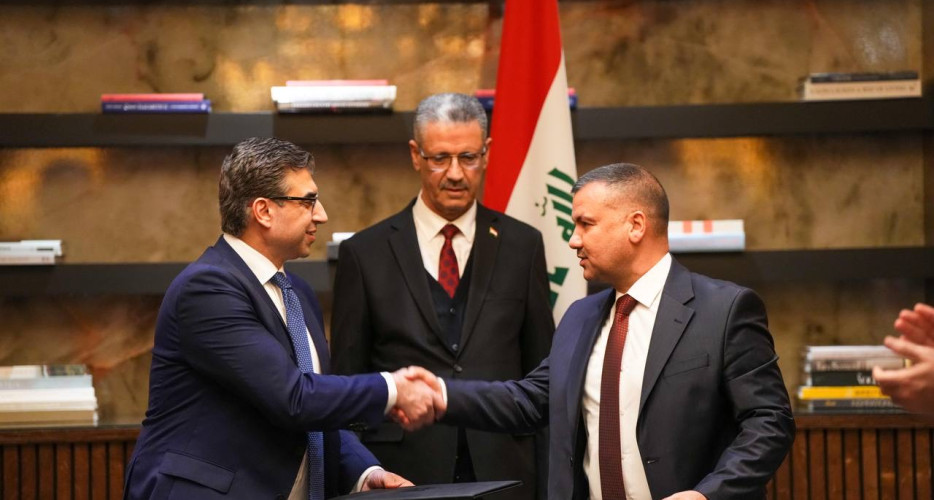
The signing ceremony, held on Tuesday evening in London, was attended by Iraqi Deputy Prime Minister and Minister of Oil Hayan Abdul Ghani Al-Sawad. Representing the Iraqi side was North Oil Company Director General Amer Khalil Ahmed, while BP Iraq Branch Director Zaid Al-Yasiri signed on behalf of the company.
According to a statement issued by the Iraqi Prime Minister’s Media Office, the MoU aims to rehabilitate and develop four oil fields in Kirkuk. The objective is to increase production and achieve targeted oil and gas output levels, enhancing Iraq’s production capabilities in the energy sector.
Kirkuk Project: A Long-Term Vision
This agreement builds on a previous MoU signed last August between BP and Iraq’s Ministry of Oil. The current plan seeks to maximize the potential of Kirkuk’s oil fields, which presently produce approximately 250,000 barrels per day. It also emphasizes leveraging natural gas and solar energy to expand energy output and diversify Iraq’s energy resources.
BP CEO Murray Auchincloss noted, “Kirkuk has five oil-rich areas with reserves of up to 20 billion barrels. The current international climate and Iraqi government conditions provide an ideal environment for realizing this ambitious project. However, we must work holistically to ensure stability and sustainable development.”
Regional Challenges and Kurdish Concerns
While the agreement marks a significant step forward for BP’s operations in the Middle East, it comes amid increasing hopes for the resumption of oil exports from Kirkuk and the Kurdistan Region to global markets via Turkey. Exports have been halted since March 2023 following a legal dispute between Iraq and Turkey.
On January 13, 2025, during the Iraqi Prime Minister's visit to London to finalize agreements with BP, KRG released a statement accusing the Iraqi government of planning to unilaterally take control of oil and gas resources in contested regions.
The timing of this announcement coincided with Iraqi Prime Minister Mohammed Shia al-Sudani’s official trip to the UK, where he signed agreements with British firms regarding oil and other issues related to disputed territories, including Kirkuk.
The KRG is particularly apprehensive that Iraq may engage in negotiations with international companies concerning oil fields currently managed by the KRG, such as the Khurmala field. This field, located near Makhmour, accounts for approximately 36% of the KRG’s oil production and lies within a disputed area under KRG administration.
Additionally, Kamal Mohammed, the Acting Minister of Natural Resources, asserts that the Kurdistan Region will continue to operate its oil fields, including those in disputed areas, in accordance with the Iraqi constitution, which protects the region’s sovereignty over its resources. He emphasized that Kurdistan will maintain control over the Khurmala oil field and that all oil fields in disputed areas will be managed collaboratively.
The KRG also criticized the federal government for signing oil contracts without coordination, labeling these actions as unconstitutional and a violation of Kurdish rights. The KRG emphasized its commitment to defending its constitutional rights by all available legal means.
KRG’s Constitutional Claims
The KRG referenced several articles of the Iraqi Constitution to substantiate its position on oil and gas resource management:
• Article 110: Excludes energy management from the federal government’s exclusive powers.
• Article 115: Grants priority to regional laws in areas not under exclusive federal jurisdiction, allowing the KRG to manage newly discovered oil and gas fields.
• Article 112: Requires joint management of older oil fields, such as Kirkuk, with equitable revenue distribution.
The KRG accused Baghdad of breaching Article 112 by signing unilateral oil contracts without consulting the regional government, asserting that “defending constitutional rights is both a national and legal obligation.”