Peregraf
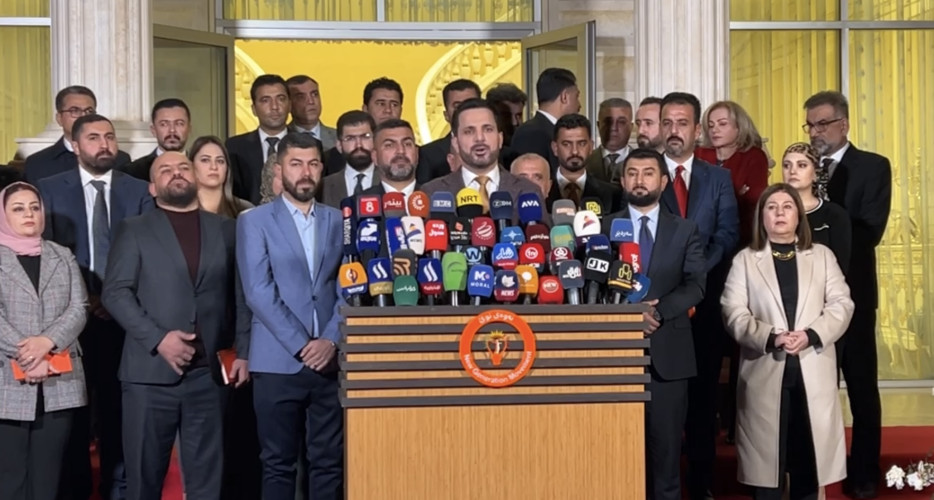
Shaswar Abdulwahid, leader of the New Generation Movement (NGM), announced that the party will not participate in the upcoming tenth cabinet of the Kurdistan Regional Government (KRG), despite being offered significant positions by the Kurdistan Democratic Party (KDP).
"The KDP has offered us six ministries, including deputy ministerial roles and general directorates with full authority," Abdulwahid stated during a press conference. "However, the KDP insists on retaining the prime minister and presidency positions, refusing to relinquish significant power. This contradicts the NGM's vision, which calls for equitable distribution of key governmental roles."
He emphasized that joining the government under such conditions would hinder the NGM’s ability to fulfill its promises to the people. "Sending 50 to 60 of our members to a government where the KDP monopolizes power is a disservice to the public and undermines our principles," Abdulwahid remarked.
The NGM leader also invited other parties seeking change to unite against single-party dominance, offering the NGM’s 15 parliamentary seats as a platform for reform. "Any party willing to challenge this status quo should propose a prime minister outside of the KDP," he added.
Abdulwahid issued a warning regarding the delay in parliamentary proceedings: "If the parliament does not convene by Wednesday and the presidency remains unelected, Mohammed Sulaiman, leader of our NGM faction, will step down from the position of the speaker of Kurdistan parliament."
NGM’s Rising Influence
The NGM, which nearly doubled its parliamentary seats in the latest elections, now holds 15 seats, making it the third-largest political force in the Kurdistan Parliament. In 2018, the party secured eight seats with 127,115 votes but garnered 290,991 votes in this election, underscoring its growing appeal as an opposition party.
Coalition Challenges Persist
The KDP and Patriotic Union of Kurdistan (PUK), the two leading parties, have formed a joint committee to draft a governance program. Despite holding the first parliamentary session on December 2, disagreements over parliamentary leadership have stalled progress.
The KDP, which won 39 seats, dominates in Erbil and Duhok, while the PUK, with 23 seats, holds sway in Sulaymaniyah and Halabja. Minority and smaller parties collectively account for 38 seats, necessitating coalition-building to achieve the 51-seat majority required for government formation.
With longstanding disputes persisting, the joint committee’s upcoming discussions will be pivotal in shaping a unified governance strategy. The outcome will determine whether the Kurdistan region can achieve political stability and address the challenges it faces.