Peregraf
The Kurdistan Parliament faced another setback today as Mohammed Sulaiman, the interim speaker and an New Generation Movement (NGM) MP, announced his resignation. Sulaiman, the oldest Member of Parliament, had been appointed as interim speaker following the inconclusive first session on December 2, 2024.
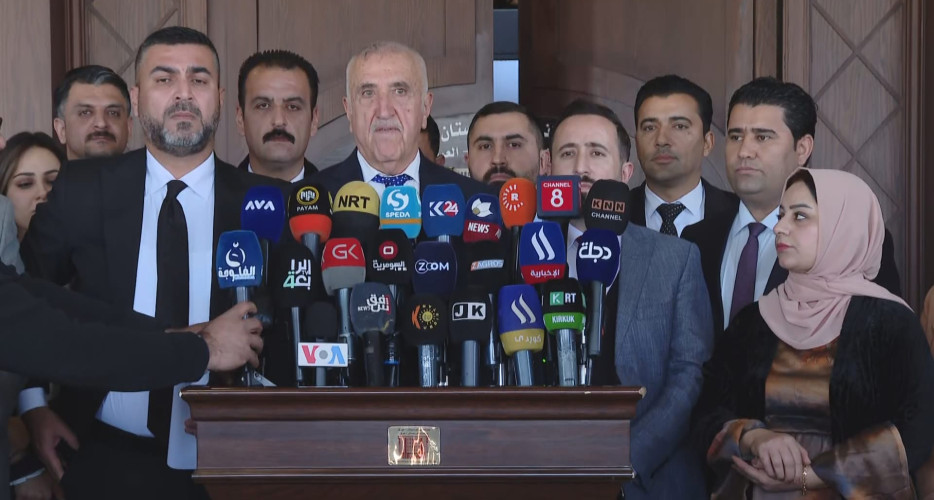
In a news conference, Sulaiman stated, “I am not ready to be in a position that does not serve, so I will resign as interim speaker of parliament.” His resignation comes amidst ongoing disagreements between the Kurdistan Democratic Party (KDP) and the Patriotic Union of Kurdistan (PUK) over parliamentary leadership.
Azad Mohammed Amin, a PUK MP, is set to replace Sulaiman as interim speaker. However, progress remains hindered as the parliament failed to convene today, with only 26 of the 100 MPs in attendance. Most members of the PUK and KDP were notably absent.
Various opposition factions within the Kurdistan Parliament have characterized Mohammed Sulaiman's resignation as a scripted event, asserting that it is a component of the arrangement between the PUK and KDP. Regarding the notion that his resignation serves the interests of the PUK, Sulaiman responded, "Why is my resignation considered a scripted event? Is my commitment to serving the people merely a scenario? Requesting the election of the parliamentary presidency is not a scripted event." The resignation of Sulaiman as interim speaker of the Kurdistan Parliament underscores the ongoing political impasse between the KDP and the PUK. This deadlock has prevented the election of permanent parliamentary leadership since the initial session on December 2, 2024.
The KDP, which secured 39 seats, holds dominance in Erbil and Duhok, while the PUK, with 23 seats, maintains control in Sulaymaniyah and Halabja. Minority and smaller parties, collectively holding 38 seats, play a critical role in coalition-building efforts to achieve the 51-seat majority required for governance.
A joint committee formed by the KDP and PUK is working to draft a governance program, but disagreements over leadership have stalled progress. The unresolved disputes raise questions about the region’s ability to form a stable government and address pressing political and economic challenges.