Peregraf
The Kurdistan Regional Government (KRG) has voiced its frustration over being excluded from the design and route of Iraq's ambitious $17 billion Development Road Project, which is set to connect the Gulf to Europe via Turkey.
Dana Abdulkarim, KRG’s Minister of Reconstruction and Housing, described the project as "the most important strategic initiative since Iraq’s establishment," but expressed concerns about the lack of consultation with the Kurdistan Region. “The Kurdistan Region will certainly not benefit from this path,” Abdulkarim said, criticizing the decision to bypass Kurdish territory.
Project Details and Controversy
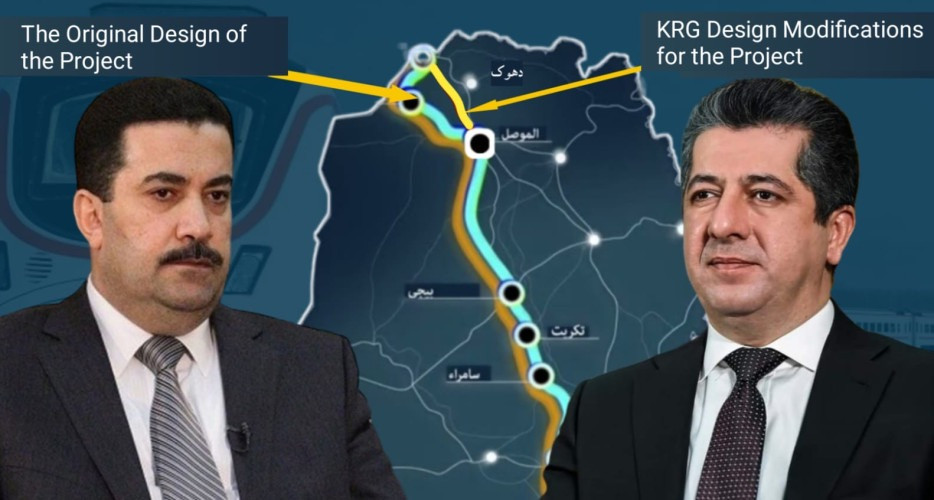
Dubbed "Iraq’s Silk Road," the Development Road is designed to facilitate trade between Asia and Europe by linking the Grand Faw Port in southern Iraq with Turkey through a network of railways and highways. The project’s current route passes through Nineveh governorate, mostly skirting the Kurdistan Region, with only a small portion briefly crossing into Duhok governorate near the Turkish border.
The KRG has repeatedly urged Baghdad to adjust the route to include more Kurdish territory, arguing that the Kurdistan Region's economic and strategic importance would enhance the project’s success. However, these proposals have been rejected.
Abdulkarim criticized Baghdad’s “centralized thinking,” stating, “As long as Baghdad continues on this path, I do not believe there is a prospect to change the route of the project.”
The Kurdistan Region stands to lose significant economic benefits if excluded from the project. The Development Road is expected to generate $4 billion annually in revenue, primarily through trade and logistics. Abdulkarim emphasized that including the Kurdistan Region in the project would not only boost the local economy but also strengthen social integration between Iraq and the Kurdistan Region.
High Stakes and Federal Rejection
Despite the KRG’s efforts to revise the route, the federal government has been reluctant to make changes. A KRG proposal to redirect the route eastward through Kirkuk and Erbil, or alternatively along the east side of the Tigris River, was rejected.
The Development Road Project, scheduled for completion by 2050, involves a $5 billion expansion of the al-Faw port and the construction of railways and highways in three phases. Trains on the new railway will travel at speeds of up to 300 kilometers per hour, reducing transport time between Europe and the Gulf from 33 days to just 15 days.
Despite the project’s transformative potential, its current route bypasses major Kurdish cities, limiting the Kurdistan Region’s role in this critical infrastructure initiative.
The KRG's continued push to include the region in the Development Road underscores the high stakes involved, with both economic benefits and broader political tensions hanging in the balance.
Read Peregraf’s previous indepthreport: