Peregraf
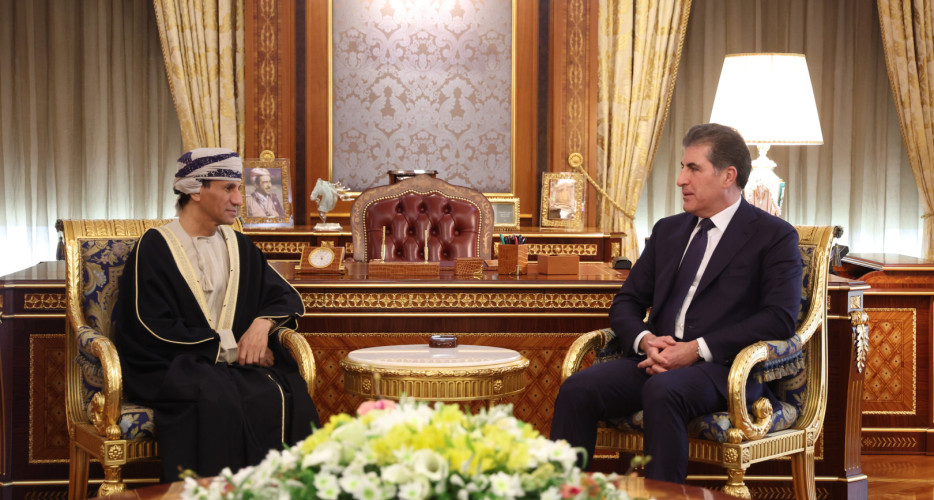
Kurdistan Region President Nechirvan Barzani met with the UN Secretary-General's Special Representative for Iraq, Mohammed al-Hassan, in Erbil, emphasizing the need to expedite the formation of the new Kurdistan Regional Government (KRG) cabinet.
According to a statement from the Presidency, the two leaders discussed the outcome of the recent KRG elections and stressed the importance of accelerating the cabinet formation process. They also reviewed broader regional issues, cooperation between the United Nations and the Kurdistan Region, and ongoing developments in Iraq.
KDP-PUK Negotiations Progress
Efforts to form the KRG's tenth cabinet are ongoing, with continued meetings between the Kurdistan Democratic Party (KDP) and the Patriotic Union of Kurdistan (PUK). The Management Strategy Drafting Committee held its final meeting yesterday, drafting a joint paper outlining the principles of governance for the coming years.
This joint committee is responsible for developing a governance and management framework, which will be submitted to the High Negotiating Committee for final approval. This step is seen as crucial in paving the way for the new government’s formation.
Advancements in KDP-PUK Relations
Relations between the KDP and PUK have seen significant progress since mid-June, following a meeting between PUK President Bafel Talabani and KRG Prime Minister and KDP Vice President Masrour Barzani. The discussion was described as productive and constructive, focusing on resolving long-standing tensions.
KDP Politburo member Hoshyar Zebari confirmed the meeting via a post on X (formerly Twitter), stating, "The meeting between PM Masrour Barzani and PUK President Bafel Talabani proceeded smoothly, featuring a candid and constructive dialogue. This aligns with the ongoing negotiation efforts between KDP and PUK to expedite the formation of the new KRG government."
Both parties face increasing pressure to reconcile their differences and address governance challenges within the Kurdistan Region.
Political Landscape and Challenges
The KDP and PUK, the dominant parties in the recent elections, continue to work towards a comprehensive governance strategy. Their primary focus is to resolve disputes and establish a stable and functional administration.
Despite the Kurdistan Parliament convening for its first session on December 2, political deadlock persists, particularly over parliamentary leadership appointments. This impasse highlights the importance of the joint committee’s efforts to foster unity and cooperation.
Election results positioned the KDP as the largest party with 39 seats, followed by the PUK with 23 seats. Minority representatives and smaller parties collectively hold 38 seats. With a 51-seat majority required to form a government, coalition-building remains essential for political stability.
The KDP maintains strongholds in Erbil and Duhok, while the PUK dominates Sulaymaniyah and Halabja, reflecting the region’s deep-rooted political and territorial divisions. Historically, cooperation between the two parties has been crucial for maintaining stability in the Kurdistan Region. Revitalizing their partnership is now seen as key to addressing the region’s pressing challenges.