Peregraf
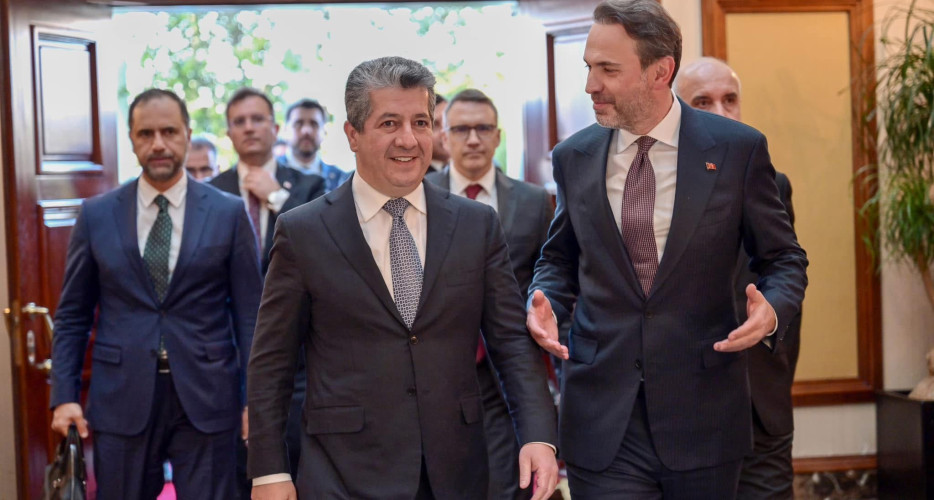
Turkish Energy and Natural Resources Minister Alp Arslan Bayraktar arrived in Erbil today, where he was welcomed by Kemal Mohammed, the Kurdistan Regional Government’s (KRG) Acting Natural Resources Minister. The visit comes amid ongoing discussions to resume oil exports from the Kurdistan Region through the Iraq-Turkey pipeline, following months of negotiations involving the Iraqi federal government, the KRG, and international oil companies.
After his arrival, Prime Minister Masrour Barzani met with Turkey’s Minister of Energy and Natural Resources to discuss strengthening ties between Kurdistan and Turkey, particularly in energy. “We agreed to remove all obstacles to the export of oil from Kurdistan through Ceyhan as soon as possible,” Barzani said.
The potential resumption of oil exports marks a significant step forward after nearly two years of disruptions caused by a legal dispute between Iraq and Turkey. However, challenges remain, particularly regarding financial disagreements between the Iraqi government and oil companies operating in the Kurdistan Region.
A recent meeting in Baghdad on March 6 aimed at resolving these disputes ended in a deadlock. The primary issue revolves around $1 billion in unpaid dues claimed by oil companies, which the Iraqi government has refused to cover. These unresolved financial issues continue to hinder long-term stability in the region’s energy sector.
Meanwhile, U.S. National Security Advisor Mike Waltz has urged the Iraqi government to address contractual disputes and settle outstanding payments to U.S. energy firms operating in the Kurdistan Region. This aligns with the broader U.S. strategy to strengthen economic ties with Iraq while increasing pressure on Iran.
Turkey’s involvement in the negotiations underscores its strategic interest in maintaining energy cooperation with the Kurdistan Region. As a key transit route for Kurdish oil exports, Turkey’s role could be pivotal in stabilizing the sector.
The broader dispute over oil exports dates back to March 25, 2023, when shipments through Turkey’s Ceyhan port were halted following a ruling by the Paris Arbitration Court in favor of Iraq. The suspension of Kurdish oil exports exacerbated financial challenges for the KRG, which relies heavily on oil revenues.
While progress has been made toward resuming exports, the broader political and financial disputes remain unresolved, casting uncertainty over the long-term outlook for the Kurdistan Region’s energy sector. For now, stakeholders continue to negotiate, hoping to reach a sustainable agreement that benefits all parties involved.