Iraq Moves Forward with First Phase of Development Road Project Amid KRG Objections Over Route
Peregraf
Prime Minister Mohammed Shia’ Al-Sudani has directed the immediate completion of procedures for the first phase of Iraq’s ambitious Development Road Project, while tensions persist with the Kurdistan Regional Government (KRG) over the project’s route.
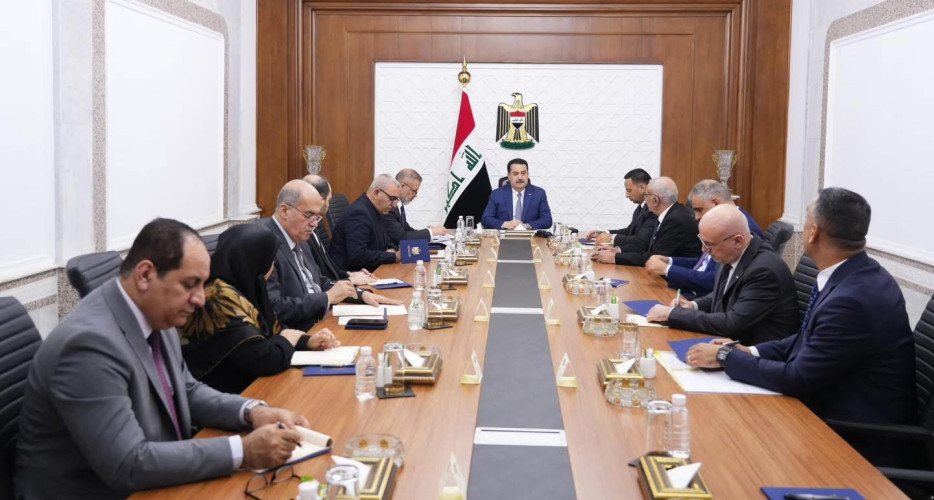
Al-Sudani on Monday chaired a meeting of the committee overseeing the rehabilitation of the Al-Faw–Fishkhabour railway, a central element of the first phase. Attendees included the Minister of Planning, a number of the Prime Minister’s advisors, and representatives from relevant ministries.
The session reviewed progress on decisions from previous meetings and identified the steps required to advance the project. The Prime Minister underscored its importance for Iraq and the broader region, especially in light of recent geopolitical shifts that have enhanced the project’s value as one of the world’s most strategic trade corridors.
According to Al-Sudani, interest from countries outside the Middle East in participating in the Development Road’s completion underscores its economic and developmental significance. The meeting examined detailed route maps, with a focus on the Iraqi railways, to ensure efficient operations. Financing for the first section of the railway will be included in the next federal budget.
Al-Sudani instructed the Ministry of Transportation to finalize all technical and administrative measures necessary for railway rehabilitation and to begin implementing the first phase soon. The meeting also welcomed support from World Bank Governors for financing the project’s initial stage and modernizing Iraq’s rail network.
KRG Disputes Federal Government’s Claims
Shortly after Baghdad’s announcement, the KRG Ministry of Transportation and Communications on March 8, 2025 issued a strong denial of federal claims that an agreement had been reached on the Development Road’s railway and international highway routes through the Kurdistan Region.
The ministry said the last formal discussion between the two sides took place on May 23, 2024, during meetings in Erbil, where a joint protocol on the project’s route was approved for presentation to both prime ministers. However, within days, Baghdad revoked the agreement via an official letter signed by Transport Minister Razzaq Muhaibas Ajimi Al-Saadawi, without explanation.
KRG officials argue that their proposed route—running from Mosul through the Nineveh Plains and Duhok to the Turkish border—is 32 kilometers shorter, safer, more cost-effective, and better serves communities along the way. They criticized Baghdad’s alternative route as passing through remote desert areas while bypassing regions severely affected by ISIS.
The KRG Ministry of Transportation and Communications reiterated its opposition in a public statement, stressing that “no final agreement has been signed” and warning against any unilateral decisions by Baghdad. The statement called for renewed technical talks “based on mutual respect and the constitutional rights of the Kurdistan Region,” adding that infrastructure planning without regional input would “weaken the project’s national unity and long-term viability.”
“The claims of a finalized agreement are completely false,” the ministry’s earlier statement said. “The constitutional rights of the people of Kurdistan will not be compromised.”
On February 12, 2025, KRG Prime Minister Masrour Barzani met with Turkish Finance Minister Mehmet Şimşek to stress the Kurdistan Region’s need for active participation in the project, which aims to connect the Gulf to Europe via Turkey.
KRG Minister of Reconstruction and Housing Dana Abdulkarim has warned that the region will “certainly not benefit” from the current plan, describing it as “the most important strategic initiative since Iraq’s establishment” but criticizing Baghdad for bypassing Kurdish territory.
Strategic and Economic Stakes
Dubbed “Iraq’s Silk Road,” the $17 billion project will link the Grand Faw Port in Basra to Turkey through railways and highways in three phases. When completed by 2050, trains capable of speeds up to 300 km/h are expected to cut transport times between Europe and the Gulf from 33 days to just 15.
The Development Road is projected to generate $4 billion annually, mainly from trade and logistics. The KRG warns that exclusion from the main route will deprive the region of significant economic benefits and opportunities for greater integration with Iraq’s broader economy.
While Baghdad presses ahead with construction, Erbil continues to push for route revisions that include more Kurdish territory, arguing that a truly national infrastructure project should serve all Iraqis.
For now, the Development Road Project moves forward, but the dispute over its path underscores the enduring political and economic fault lines between Iraq’s federal and regional government.