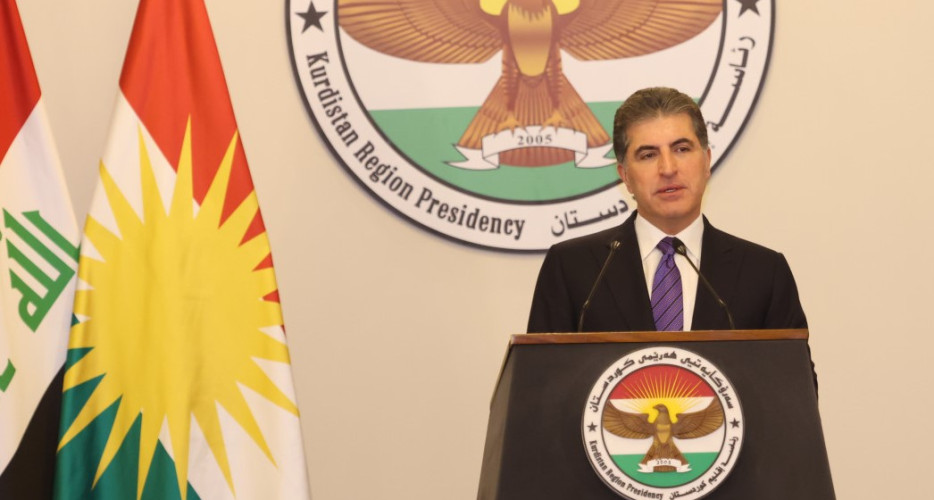
Peregraf — Drone attacks targeting the residence of Kurdistan Region President Nechirvan Barzani in Duhok has intensified regional tensions and triggered a wave of international and domestic condemnation, while leaving one central question unanswered: who is responsible? The United States has directly attributed responsibility to Iran-backed armed groups in Iraq, while Kurdistan Region Prime Minister Masrour Barzani stopped short of a direct accusation. Iran and those armed groups deny any involvement and have condemned the attack.
So far, no group has claimed responsibility for the attacks. Neither the Kurdistan Regional Government nor Iraq's federal authorities have officially attributed the strikes to any specific actor, and the investigation remains ongoing.
The uncertainty has created a vacuum quickly filled by competing narratives from regional and international actors, underscoring the complexity of Iraq's fragmented security landscape and its position within broader Middle East tensions involving Iran, the United States, and allied armed groups.
Escalating attacks across the Kurdistan Region
The latest escalation began with a drone strike on the residence of Kurdistan Region President Nechirvan Barzani in Duhok. A second strike followed less than 24 hours later, according to local sources, amid reports of drones being intercepted by security forces.
The incident follows an earlier drone strike that occurred at approximately 11:16 AM on March 28. Footage from the first attack shows security forces engaging a drone with heavy gunfire. Following the engagement, a large explosion occurred, sending a plume of white smoke over the property. The attacks were part of a wider wave of drone and missile activity that also affected Erbil and Sulaymaniyah, including areas near the residence of Masoud Barzani, President of the Kurdistan Democratic Party (KDP).
No casualties have been officially confirmed in the latest incidents, though some strikes caused material damage. Authorities in Erbil, Duhok, and Sulaymaniyah later declared a holiday. Schools and universities—scheduled to resume on March 29 after being suspended since March 4—remain closed due to continued security concerns.
U.S. points to Iran-aligned groups
Washington has been the most direct in assigning blame. The United States "unequivocally and forcefully" condemned the attacks, describing them as the work of Iran-aligned armed groups operating in Iraq. In a statement, Principal Deputy Spokesperson Thomas Pigott said the U.S. "categorically rejects these indiscriminate and cowardly terrorist acts" and referred to the perpetrators as "Iran’s terrorist proxies."
"These actions by Iran and its proxies are a direct assault on Iraq’s sovereignty, stability, and unity," Pigott said. U.S. officials did not present public evidence but have previously attributed similar strikes in Iraq to networks aligned with Tehran.
Iran’s Revolutionary Guard rejects responsibility
In contrast, Iran’s Islamic Revolutionary Guard Corps (IRGC) issued a statement condemning the attacks on President Nechirvan Barzani’s residence, calling them a "terrorist act" carried out by "aggressive enemies." The IRGC framed the incident as part of a pattern of regional destabilization driven by the United States and Israel. The statement claimed such operations are intended to undermine regional cooperation and reiterated Iran’s readiness to defend the security of its neighbors. The IRGC did not acknowledge involvement and instead blamed external actors for the escalation.
Iraqi Prime Minister Mohammed Shia' al-Sudani condemned the strikes in a phone call with Nechirvan Barzani and announced the formation of a joint federal-Kurdish investigative committee. The body, composed of Iraqi federal security forces and Kurdistan Region security agencies, is tasked with identifying the perpetrators. Al-Sudani described the attack as a "blatant violation" and emphasized that Iraq must not be drawn into regional conflict by "outlaw entities." However, Iraqi officials have not publicly named a suspect group.
Masrour Barzani warns of retaliation
Kurdistan Region Prime Minister Masrour Barzani also condemned the attack, indirectly attributing responsibility to Iran-backed armed groups in Iraq while warning of potential retaliation. "I condemn and denounce in the strongest terms the cowardly drone attack on the residence of Nechirvan Barzani," he stated. "We call on the federal government to act on its responsibilities and bring these outlaw criminals to justice." He further urged the international community to support the Kurdistan Region, adding, "We reserve every right to confront these terrorists."
Armed groups deny responsibility
Several Iran-aligned armed factions in Iraq have rejected responsibility while offering political interpretations of the events. Abu Alaa al-Walai, Secretary-General of Kata'ib Sayyid al-Shuhada, condemned the strike, describing it as inconsistent with the "ethos of the resistance." He suggested external actors might be attempting to send messages through escalation in northern Iraq.
Late Saturday, KDP President Masoud Barzani revealed that his headquarters have been attacked five times in recent days, noting these incidents were kept undisclosed to avoid public anxiety. He emphasized that while the Kurdistan Region is not a party to the broader conflict, it has faced sustained strikes.
The escalation comes on the 30th day of the US-Israel War on Iran, which began on February 28, 2026. Data compiled by Peregraf Media Foundation indicates that more than 500 drones and missiles have targeted locations across the Kurdistan Region since the outbreak of hostilities. These operations have been attributed to either Iranian forces or the Islamic Resistance in Iraq.
According to Peregraf, at least 13 people—including Peshmerga personnel and security officers—have been killed, with approximately 50 others wounded. One of the deadliest incidents occurred on March 24, when six Peshmerga fighters were killed in ballistic missile strikes in Erbil Province. Despite the competing claims, no definitive evidence has emerged publicly linking a specific actor to the recent strikes on the President’s residence.